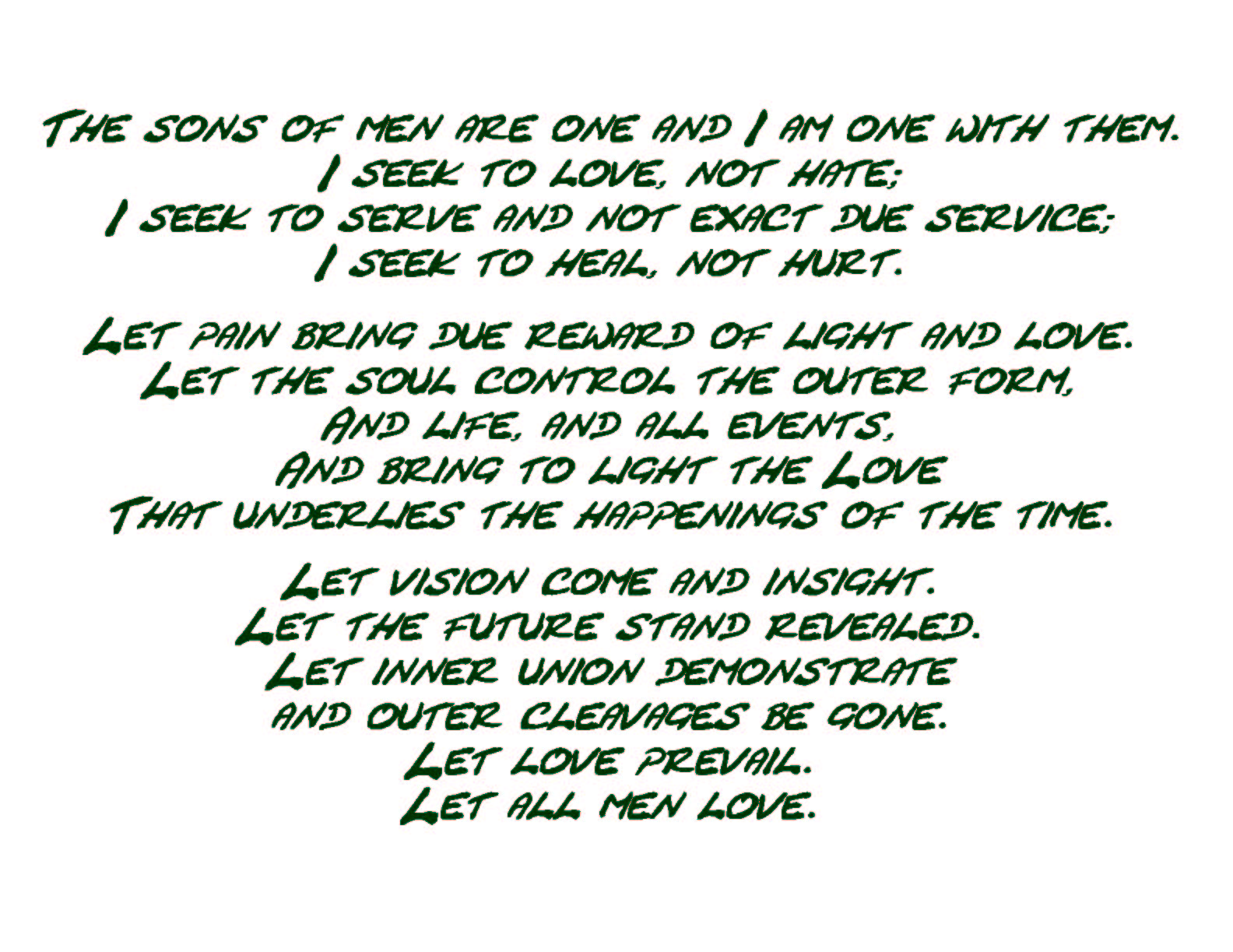
ON LOVE; PART XDX
ΑΩ•ΑΩ•ΑΩ•ΑΩ•ΑΩ•ΑΩ•ΑΩ•ΑΩ•ΑΩ•ΑΩ•ΑΩ•ΑΩ•ΑΩ•ΑΩ•ΑΩ•ΑΩ•ΑΩ•ΑΩ•ΑΩ•ΑΩ•ΑΩ•ΑΩ•ΑΩ•ΑΩ•ΑΩ•ΑΩ•ΑΩ•ΑΩ•ΑΩ•ΑΩ•ΑΩ•ΑΩ•ΑΩ•ΑΩ•Α
GoodWill IS Love in Action
ΑΩ•ΑΩ•ΑΩ•ΑΩ•ΑΩ•ΑΩ•ΑΩ•ΑΩ•ΑΩ•ΑΩ•ΑΩ•ΑΩ•ΑΩ•ΑΩ•ΑΩ•ΑΩ•ΑΩ•ΑΩ•ΑΩ•ΑΩ•ΑΩ•ΑΩ•ΑΩ•ΑΩ•ΑΩ•ΑΩ•ΑΩ•ΑΩ•ΑΩ•ΑΩ•ΑΩ•ΑΩ•ΑΩ•ΑΩ•Α
The Gospel of Thomas
These are the hidden words that the living Jesus spoke. And Didymos Judas Thomas wrote them down.
(46) Jesus says: “From Adam to John the Baptist, among those born of women there is no one who surpasses John the Baptist so that his (i.e., John’s) eyes need not be downcast. But I have also said: ‘Whoever among you becomes little will know the kingdom, and will surpass John.’”
(47) Jesus says: “It is impossible for a person to mount two horses and to stretch two bows. And it is impossible for a servant to serve two masters. Else he will honor the one and insult the other. No person drinks old wine and immediately desires to drink new wine. And new wine is not put into old wineskins, so that they do not burst; nor is old wine put into (a) new wineskin, so that it does not spoil it. An old patch is not sewn onto a new garment, because a tear will result.“
(48) Jesus says: “If two make peace with one another in one and the same house, (then) they will say to the mountain: ‘Move away,’ and it will move away.“
(49) Jesus says: “Blessed are the solitary ones, the elect. For you will find the kingdom. For you come from it (and) will return to it.“
(50) Jesus says: “If they say to you: ‘Where do you come from?’ (then) say to them: ‘We have come from the light, the place where the light has come into being by itself, has established [itself] and has appeared in their image.’If they say to you: ‘Is it you?’ (then) say: ‘We are his children, and we are the elect of the living Father.’If they ask you: ‘What is the sign of your Father among you?’ (then) say to them: ‘It is movement and repose.’” 14
As we continue to promote the Values to Live By as our Quote of the Day, we should here begin to look at the meaning of some of these words which we have used and spoken of several times over the course of this blog. Today we look again at the first of these Values: A Love of Truth—essential for a just, inclusive and progressive society. When we can begin to view humanity as a homogeneous whole rather the a combination of many selves, we can perhaps begin to see the reality of the Golden Rule as it should play out in the lives of men in the world. The Rule is rather simple as it says ‘do unto others as you would have others do unto you‘ but there is a greater depth here when this Rule is viewed in relationship to the whole of the human FAMILY; in this context the Golden Rule should also mean that we react in a fair and an honest way with ALL men and it is in this that we can find that Love of Truth that our first value declares as an essential part of Life if there IS going to be a just, inclusive and progressive society. It it likely True that if one asks the question of others that the response would be YES, that they would want a just, inclusive and progressive society and of course this would be something that would benefit most ALL men. However, at the same time there are in the world today, as there have ever been, many who would profess this desire but at the same time continue in the way of selfishness and this is True in religion, in politics, in business…in virtually ALL avenues of human expression.
In regard to our idea here of A Love of Truth this selfishness takes on the form of deliberate untruths or words that are colorfully painted as Truths but which are self-serving for the individual or for the group that expounds them. Deliberate untruths are rather apparent and it IS to those who use this tactic in promoting whatsoever cause that is of benefit to themselves or the sense of principal that they have adopted that we speak in saying that they themselves KNOW that their words are untrue and in this is their violation of the Golden Rule. Hence, in this there IS NO Love of Truth. The other part of this. the words and ideas that a man or a group profess as Truths that are but colorfully painted expositions of a selfish and self-centered attitude, are sometimes more difficult to see by the hearer and perhaps at times by the teller as well; these paint one’s position in a beneficial light or paint another’s as wrong and harmful and are based in dubious ‘facts’ as pronounced by the promoter of such ideas. This degree of dishonesty IS NOT generally seen as wrong, nor hurtful but rather as the salesmanship of ideas and the reality here is this IS just as much a lie, just as much an untruth, as are the pronouncements of the man or the group that expound deliberate untruths. This too is against the precept of the Golden Rule as these words and ideas mislead and misinform many so as to hide a different Truth that may be detrimental to one’s cause. We should see in this idea those half-truths as if a thing is half True, it is also half lie. Here again there is NO Love of Truth and there is no True understanding of this precept of the Golden Rule as in these untruths one is acting toward others as one would not want others acting toward him.
In our understanding of the Truth of the ONE Humanity ALL should be able to see and to measure the results of their actions in regard to others, to one’s brother, one’s neighbor and to the stranger who qualifies as both and, in this idea of A Love of Truth we should also be able to clearly see the Master’s teaching on Love which must necessarily include Truth if it IS to be rightfully accomplished. And, for the Christian world there should be the understanding that to participate in these untruths one is at the same time ignoring the words of the Master, of Jesus the Christ whose name adorns their religion as it IS He that tells us: “Therefore all things whatsoever ye would that men should do to you, do ye even so to them” (Matthew 7:12), or the alternate reading in the Gospel of Luke which says: “And as ye would that men should do to you, do ye also to them likewise” (Luke 6:31).
In the last essay we discussed the forty eighth saying from the Gospel of Thomas which says: “If two make peace with one another in one and the same house, (then) they will say to the mountain: ‘Move away,’ and it will move away“. In our discussion we noted that the commentary on this saying included a reference to the words from Matthew’s Gospel regarding the Master’s words to his disciples on those things that they may bind in heaven or in the Earth and while this these things ARE undefined and thereby unknown, we can assume that they ARE things of a spiritual nature as the Master does not teach us of the things of the world. The commentators’ point however is found in the idea that “That if two of you shall agree on earth as touching any thing that they shall ask, it shall be done for them of my Father which is in heaven. For where two or three are gathered together in my name, there am I in the midst of them” which we found that we too could relate to this saying from Thomas’ Gospel from the view of the Soul expressing through form as the two….the Soul and his expression; and then the idea of two or three being this same idea plus the addition of the Spirit of the man. Here, while we can agree with the comments on this, our reasoning is much different as they see this and the subject saying from Thomas as two people agreeing and not as two or three aspects of the spiritual man coming together in unity. For us, the idea of the two people is the parable and the idea of the spiritual aspects of man is the hidden meaning of the parable.
We also see a greater affinity of these words from Thomas Gospel with the overall ideas that are painted for us in the sayings from the Master in the synoptic gospels about the moving of the mountain, the planting of the sycamine tree and the withering of the fig tree as each of these relies on that sense of KNOWING that we read in the stated ideas of one’s having “faith as a grain of mustard seed” (Matthew 17:20); or being one that “shall not doubt in his heart, but shall believe that those things which he saith shall come to pass” (Mark 11:23) which both mean to say that “If ye have faith, and doubt not” (Matthew 21:21). Each of these is offered with the idea that to do so one can move the mountain, plant the tree in the sea or wither the tree along the way and this is the same context that we find in the words of the Master in Thomas’ Gospel. While the criteria here is stated differently, we see and understand that this does also mean the same thing for in this peace in the same house; in this unity of the Soul and his expression, there IS this same KNOWING that allows for these miracles to occur. In any other terms none of these ideas like the moving of the mountain can make any sense for a man in this world.
Our next saying, the forty ninth, is seemingly obscure and it not presented in this way in the accepted gospels. While most of the translations are similar, there is some difference which we list here for clarity:
- Jesus said: “Blessed are the solitary and the elect, for you will find the kingdom, for you came forth from it, (and) you will return to it again” (Blatz).
- Jesus said, “Blessed are those who are solitary and superior, for you (plur.) will find the kingdom; for since you came from it you shall return to it” (Layton).
- Jesus says: “Blessed are the solitary and the elect, for you will find the Kingdom! Because you have issued from it, you will return to it again” (Doresse).
- Jesus said, “Blessed are the solitary and elect, for you will find the kingdom. For you are from it, and to it you will return” (Lambdin).
- Jesus said, “Congratulations to those who are alone and chosen, for you will find the kingdom. For you have come from it, and you will return there again” (Patterson and Meyer).
- Jesus says: “Blessed are the solitary ones, the elect. For you will find the kingdom. For you come from it (and) will return to it” (Patterson and Robinson).
- Said Jesus this: “blest ones are the single ones and chosen, for you will fall to the Kingdom, for you (are) of out of her, again you will be going to there” (Interlinear Version).
Looking at these translations and at the Interlinear we should notice that many render the Coptic word as solitary with one using alone while the Interlinear rendering of this is as single-ones. Additionally, the idea from Patterson and Meyer on congratulations along with alone and chosen do not make sense for us in the context of this overall saying and the idea of Layton regarding superior IS also out of place. We also see some difficulty in this idea of solitary here as the rendering of the what is the single one of the Interlinear; in this saying there appears to be additional meaning that can be ascribed. The last time that we saw this Coptic word was in the sixteenth saying where the majority of the translators again use the word solitary to render the Coptic word while the Interlinear said again single ones (In the Words of Jesus part 779); there, we opted for the idea of stand alone which was closest to the Interlinear which says: “stand to their feet, they being single-ones“. In this context we saw the idea that each, the father and the son, would stand in opposition or in favor individually about the Master and His teaching.
Here in this saying however we have a different dynamic as we are speaking about single ones who ARE the elect, or the chosen under certain definitions of that word, who the Master says WILL find the Kingdom and since solitary seems to reference a single person alone, our thought here is, like in the last saying, the idea that the single-one is that same who has found Unity of Soul and the expression of the Soul; the single-minded man in the world. It is only this man who IS such that IS accounted worthy of the Kingdom of God; being alone is of little value and the idea of elect or chosen includes the idea of discipleship and the accomplishment of those criteria that puts a man into the Kingdom of God. We will continue with these thoughts after we look at these commentaries on this saying:
- Robert M. Grant and David Noel Freedman write: “The ‘single’ or ‘solitary’ ones will find the kingdom or, in Saying 75, will enter the bridechamber. They are no more from the world than Jesus himself is (John 17:16); they are one as Jesus and the Father are one (John 17:23). Where Jesus is, they will also be (John 17:24).” (The Secret Sayings of Jesus, p. 160).
- Helmut Koester points out a parallel to John 16:28: “I have come out from the Father and I have come into the world. I am again leaving the world and return to the Father.” (Ancient Christian Gospels, p. 121).
- Gerd Ludemann writes: “The beatitude moves from the third person plural to the second person plural in the same way as the beatitude in Logion 54. For the ‘solitary ones’ cf. 4.2; 16.4; 75, etc. For the notion that the solitary ones are the elect cf. 23.1-2.” (Jesus After 2000 Years, p. 614).
- Funk and Hoover write: “Thomas 49 and 50 constitute a miniature catechism for Thomean Christianity. Thomas 49 depicts Thomas Christians as those who have come into the world from another realm, to which they will one day return. This is a central tenet of the mythology of gnosticism.” (The Five Gospels, p. 502).
While the intent of the Master is largely the same, the ideas of Mr Luderman should be somewhat discounted as the rendering in that verse of solitary one or single one as it is rendered by most is from different Coptic words which are rendered by the Interlinear as “they will stand to their feet, they being one alone“. The context here in the twenty third saying is that the Lord will choose the disciple saying “I shall choose you, one out of a thousand, and two out of ten thousand” (Lambdin) and we should be able to see the relationship, not in the words but in the meaning, being the chosen in both as the chosen ARE the elect of the Kingdom. In the twenty third saying we looked at the idea of choose as we normally do, that it IS the Christ Within that makes this choice and who elects to follow the spiritual Path in his Life in this Earth and this is a valid way of viewing this in both of these sayings. In Repentance a man makes his choice; he chooses to follow the Way of the Disciple through the prompting of the Soul and the rareness of this is reflected upon in His words that there be “one out of a thousand, and two out of ten thousand“, which is of course but a number used to reflect this rarity, and the Master’s saying from Matthew that we should “Enter ye in at the strait gate: for wide is the gate, and broad is the way, that leadeth to destruction, and many there be which go in thereat: Because strait is the gate, and narrow is the way, which leadeth unto life, and few there be that find it” (Matthew 7:13-14). This is of course that same choice, that same Repentance; and it is this one who IS chosen, or rather this one who chooses, that will stand alone being one alone….the Soul and his expression to the world held in Unity by his continued focus upon the Good, the Beautiful and the True.
This Is the same thought that we should bring forward to this forty ninth saying; this same Repentant man who IS the Soul expressing to some ever greater degree through his Life in this world IS he who has chosen to do so, this is the man whose decision was to enter at the strait gate. This is the man who “will find the kingdom“….who has found the Kingdom. This is the man who has “found one pearl of great price, went and sold all that he had, and bought it” (Matthew 13:46); this is the single-minded man, the man in Unity of Soul and expression who forsakes ALL for the one pearl, the Kingdom of God. Mr. Grant sees a part of this in his commentary above and he references the same ideas from the Gospel of John that we referenced in our discussion of the twenty third saying (In the Words of Jesus part 789).
The final part of this saying is the same as our own core beliefs but this is of course not rightly understood in the doctrines of the churches who tend toward the ideas of the early part of the Book of Genesis where we read: “In the sweat of thy face shalt thou eat bread, till thou return unto the ground; for out of it wast thou taken: for dust thou art, and unto dust shalt thou return” (Genesis 3:19). This of course relates to the body of the man in the world and this is likely the only way that the man in that time, many thousands of years ago, could have understood these ideas. The body will surely return to this dust but what of the Soul? where does this go? In the Book of Ecclesiastes we find the more modern, yet still thousands of years old, saying that: “As he came forth of his mother’s womb, naked shall he return to go as he came, and shall take nothing of his labour, which he may carry away in his hand” (Ecclesiastes 5:15); here there is no mention of dust and the Earth but there is yet a going somewhere which is for us the afterlife and for the doctrines some admixture of heaven, hell, purgatory and whatnot which are as equally undefined as our own thoughts. And there is no speaking of where the Life and the consciousness come from; this is certainly not out the ground, nor is this out of the mothers womb or, at least neither of these can be explained as such yet today.
We of course see Life as that continuum which began with the first incarnation of a man where he is born into the Earth as a Soul out of heaven; a man who has embarked on that long journey through time and space, through death and rebirth, until he sees that objective and that goal of Life for ALL mankind….to return from whence he came. And that great step in realizing this goal and this objective is found in the decision that one makes in Repentance. Here the man stands in Unity of Soul and expression as his new focus of Life and begins that process of Transformation that leads to Redemption and his return to the Kingdom of God. And it is this end part that the Apostle Paul frames for us as that mankind “shall be delivered from the bondage of corruption into the glorious liberty of the children of God” (Romans 8:21).
We will continue with our thoughts in the next post.
| Aspect of God |
Potency |
Aspect of Man |
In Relation to the Great Invocation |
In relation to the Christ |
|
GOD, The Father |
Will or Power |
Spirit or Life |
Center where the Will of God IS KNOWN |
Life |
|
Son, The Christ |
Love and Wisdom |
Soul or Christ Within |
Heart of God |
Truth |
|
Holy Spirit |
Light or Activity |
Life Within |
Mind of God |
Way |
Note on the Quote of the Day
This daily blog also has a Quote of the Day which may not be in any way related to the essay. Many of these will be from the Bible and some just prayers or meditations that may have an influence on you and are in line with the subject matter of this blog. As the quote will change daily and will not store with the post, it is repeated in this section with the book reference and comment.
Values to Live By
A Love of Truth—essential
for a just, inclusive and progressive society;
A Sense of Justice—recognition
of the rights and needs, of all.
Spirit of Cooperation—based
on active goodwill and the principle of right human
relationships;
A Sense of Personal Responsibility—for
group, community and national affairs;
Serving the Common Good— through
the sacrifice of selfishness. Only what is good for all
is good for each one.
The world of the future depends on what each one of us chooses to do today.
From a previous essay and Quote of the Day we reprise these words: It is interesting to note that the ideas of the Quote of the Day embody much of the Master’s teachings and can set the stage for the beginning of each man’s revelation and realization of the Light of the Soul; that is, that by the intentional practice of these ‘rules’ of conduct one can put himself in the position of a follower of the Master and an keeper of His word and this regardless if he has ever heard of the Christ or wants to be affiliated with any ideas Christian. By keeping these sound principals of Life in mind and practicing them a man can lift himself up above and beyond the world of men and into the world of the Good, the Beautiful and the True as it exists for those in whom the Christ Within, the God Within, is awakened. Ponder on this.
Let the peace of God rule in your hearts!
- 14 The Gospel of Thomas; Translated by Stephen J. Patterson and James M. Robinson; http://gnosis.org/