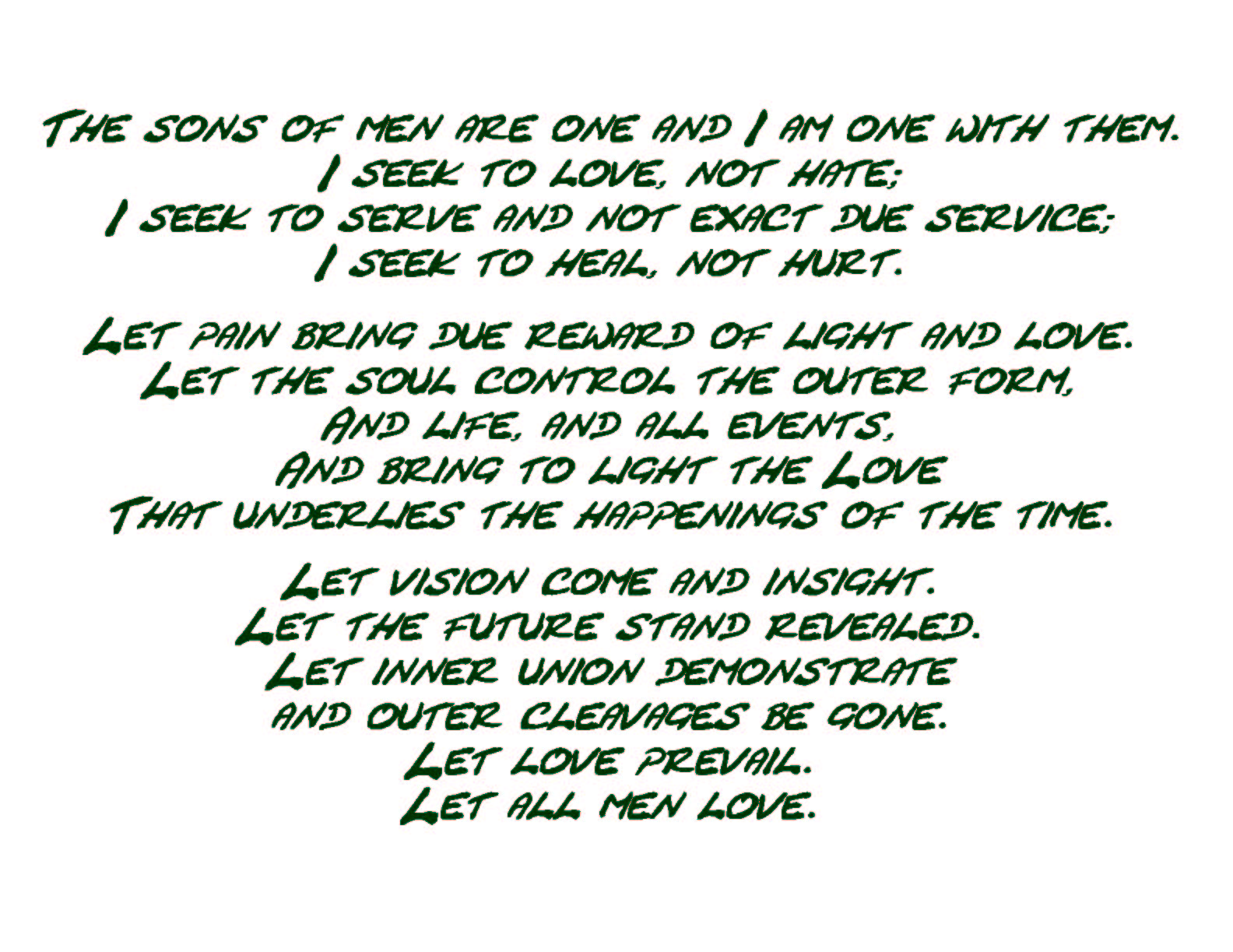
ON LOVE; PART MDLXII
ΑΩ•ΑΩ•ΑΩ•ΑΩ•ΑΩ•ΑΩ•ΑΩ•ΑΩ•ΑΩ•ΑΩ•ΑΩ•ΑΩ•ΑΩ•ΑΩ•ΑΩ•ΑΩ•ΑΩ•ΑΩ
FIRST IS THE GREAT COMMANDMENTS: “The first of all the commandments is, Hear, O Israel; The Lord our God is one Lord: And thou shalt love the Lord thy God with all thy heart, and with all thy soul, and with all thy mind, and with all thy strength: this is the first commandment. And the second is like, namely this, Thou shalt love thy neighbour as thyself. There is none other commandment greater than these” (Mark 12:29-31).
ΑΩ•ΑΩ•ΑΩ
WHAT THEN IS LOVE? In a general sense love is benevolence, good will; that disposition of heart which inclines men to think favorably of their fellow men, and to do them good. In a theological sense, it includes supreme love to God, and universal good will to men. While this IS from an older definition of Charity, which IS rendered in the King James Bible from the same Greek word agape which IS generally rendered as Love, we should amend our own definition here to include the idea that in the reality of Love a man will accord to ALL men ALL things that he would accord to himself and to say that Love IS our thoughts and attitude of the equality of ALL men regardless of their outward nature or appearance…that ALL ARE equally children of Our One God.
ΑΩ•ΑΩ•ΑΩ
PLUS THE EVER IMPORTANT AND HIGH IDEAL TAUGHT TO US BY THE CHRIST: “Therefore all things whatsoever ye would that men should do to you, do ye even so to them” (Matthew 7:12).
ΑΩ•ΑΩ•ΑΩ•ΑΩ•ΑΩ•ΑΩ•ΑΩ•ΑΩ•ΑΩ•ΑΩ•ΑΩ•ΑΩ•ΑΩ•ΑΩ•ΑΩ•ΑΩ•ΑΩ•ΑΩ
We ended the last essay with our trifecta of Jesus sayings that ARE our way to the Truth, to True discipleship, to the Kingdom of God and to having the Presence of God in our lives here and now. While we DID NOT end our current discussion on works, a discussion that IS in opposition to the views of the doctrines of men, with our trifecta for any purpose other than to include it in our essay, it DOES work to further highlight the Truth of works. The Master tells us to “Let your light so shine before men, that they may see your good works, and glorify your Father which is in heaven” (Matthew 5:16) and it IS with this in mind that we should look at our trifecta which we repeat here for clarity:
- “If ye continue in my word, then are ye my disciples indeed; And ye shall know the truth, and the truth shall make you free” (John 8:31-32).
- “Not every one that saith unto me, Lord, Lord, shall enter into the kingdom of heaven; but he that doeth the will of my Father which is in heaven” (Matthew 7:21).
- “He that hath my commandments, and keepeth them, he it is that loveth me: and he that loveth me shall be loved of my Father, and I will love him, and will manifest myself to him. Judas saith unto him, not Iscariot, Lord, how is it that thou wilt manifest thyself unto us, and not unto the world? Jesus answered and said unto him, If a man love me, he will keep my words: and my Father will love him, and we will come unto him, and make our abode with him. He that loveth me not keepeth not my sayings: and the word which ye hear is not mine, but the Father’s which sent me” (John 14:21-24).
In these words ARE the Master’s telling us of how that our “good works” as men can be shown in the Light of day and we should understand here that ALL “good works” necessarily stem from this activity: that we keep His words. It IS through our striving to keep His words that men “may see your good works” and, through the idea that this DOES “glorify your Father which is in heaven” we should see that others will follow. While the idea of doxazo which IS rendered as glorify IS understood as: to praise, extol, magnify, celebrate 9 in this usage, the idea runs much deeper. We ARE told to shine your light before men as Wycliffe renders the Master’s words and it IS in this that we glorify God; not as a personal act of praise or worship but as an encouragement to others to follow. It IS in this Light that “your good works” ARE on display as we put our “good works” in that Light “on a candlestick” so that we can “giveth light unto all that are in the house” (Matthew 5:15). From this perspective in our ability to DO such works as striving to keeping His words, we ARE actively DOING those works that can be understood as “good works“. While much of Christian doctrine teaches that DOING anything that can be considered to be for our ‘salvation‘ IS unnecessary, this whole theological idea IS based on the false premise that Paul IS speaking about such works. In our view this mainstream Christian theology that men cannot earn their way to heaven through good works or deeds ** DOES naught by deceive aspiring Christians according to James’ words saying “be ye doers of the word, and not hearers only, deceiving your own selves” (James 1:22). While these words should have created a dilemma for the Christian world, they DID NOT and this perhaps because of the power given to the words of Paul over ALL else in the New Testament.
We should note here that Paul himself shows us the reality of our “good works” but because the church has settled upon a select few out of context verses to construct their doctrines, his words have only a distorted effect. Paul tells us, in a segment of his Epistle to the Ephesians that IS ofttimes used to support the doctrinal view of works, about our need to DO “good works“. The apostle tells us “by grace are ye saved through faith; and that not of yourselves: it is the gift of God: Not of works, lest any man should boast. For we are his workmanship, created in Christ Jesus unto good works, which God hath before ordained that we should walk in them” (Ephesians 2:8-10). The contradictory nature of these words should have awakened the church to the inadequacy of their doctrinal themes but it has NOT. Let us explore the apostle’s words here along with some of his other references to our need to DO “good works“. What we should try to see in these words IS the dual use of ergon, which is rendered twice as works. Of course the doctrinal ideas of the church DO NOT recognize a duality here as we DO. The doctrinal idea IS that “good works” ARE the intended result of one’s ‘salvation‘ accomplished without works; a caveat IS then added saying: good works are the intended result, with God preparing specific actions for believers to walk in***. Such doctrinal jargon misses the apostle’s point. Properly understood, grace IS ALL things that come from the Godhead into the lives of men in this world. This grace then saves us from our own Life in vanity and here we should remember two things. The first IS that ALL ARE born into this vanity; Paul shows us this saying “the creature was made subject to vanity, not willingly, but by reason of him who hath subjected the same in hope, Because expectation that the creature itself also shall be delivered made free from the bondage of corruption into the glorious liberty of the children of God” (Romans 8:20-21). Our changes here have been documented throughout our blog posts to reflect Vincent’s commentary and the better use of the Greek word eleutheroo as made free which agrees with the rendered word in our trifecta above.
The second thing IS the definition of this idea of vanity which is alternately rendered as futility, frustration, “God’s curse“, “the power of change“, and “condemned to lose its purpose” in various bible translations. None of these ideas properly explains the nature of mataiotes save for vanity and this ONLY when it IS defined as Vincent shows us saying that this vanity IS: a perishable and decaying condition, separate from God, and pursuing false ends 4. Vanity then defines the state of men in the absence of God, in the absence of KNOWING God. Understanding our vanity, while similar in effect to the doctrinal ideas of the ‘fall of man’, IS an important part of our journey out of that vanity. In the idea of the ‘fall of man’, ALL are lumped into a doctrinal category that depicts a sorry state based on the ‘sins’ of one man in the beginning of the Book of Genesis. In vanity we have a picture of being born into a state where we ARE in this world with NO knowledge of the reality of our spiritual Life as the Soul because the Soul CAN NOT properly influence the totally dependent infant form. To further our vanity, our separation from the Godhead continues as we ARE then subjected to years of nurturing and indoctrination into the ways of the world, ways that we must strive to escape in order to realize some measure of Truth. It IS through our growing measure of Truth that we come to KNOW God and it IS in this KNOWING that we find the Truth of faith. Grace then, being ALL that flows from the Godhead through our own Souls, saves us from our own vanity, through our growing ability to KNOW, by measure, God. This IS the reality of the opening line of Paul’s words saying “by grace are ye saved through faith“. The human mind exists apart from God and in the idea of Redemption the mind IS reconciled with the Soul, the source of human Life and the Christ Within that reveals ALL to the mind. This however IS NOT our subject for today.
With this in mind, it IS easier to understand the next words from Paul saying “and that not of yourselves: it is the gift of God“. We should try to see that while there may be some more spiritually focused people in Paul’s audience, the message here IS a general one addressed to the novice as well as the saint. This we should see through Paul’s introduction saying “Paul, an apostle of Jesus Christ by the will of God, to the saints which are at Ephesus, and to the faithful in Christ Jesus” (Ephesians 1:1). In the idea of faithful which IS rendered from the Greek pistos, a kindred word to pistis which we define as KNOWING, we should try to see those striving toward the goal of KNOWING God. We should be able to see this through the idea of the saint which represents the the True disciple, the one who KNOWS God. We should remember here that this idea of saint IS NOT what IS presumed in doctrines; the saint IS NOT the average ‘believer’ in the Lord as it IS used by some nor IS sainthood a posthumous award as it IS used by others. Paul then IS writing to both the saint, the True disciple if you will, and to the one who strives toward this goal….the aspirant to discipleship. The former group KNOWS the reality of what Paul IS saying while the latter group IS being addressed as men in this world albeit men who have some measure of Truth in their lives. It IS as men that the aspirant must understand that it IS never the carnal self that achieves anything spiritual and here especially through the idea of works that represent that carnal self. We should keep in mind here the ideas from the last essay where even those deeds that can be considered as “good works” can be tainted by the motivations of men. This IS framed by Jesus in three examples where the idea IS that the True disciple and aspirant should DO naught “that they may have glory of men” (Matthew 6:2). Paul adds that our being saved from our own vanity “is the gift of God” and here we should see the Godhead working through our own Souls.
Finally, the idea of gift from the Greek word doron should be understood in relation to the beginning idea of grace. Grace comes from the Godhead and this IS the gift by which we ARE saved from our vanity. The idea of a gift IS largely misunderstood in this context; in the defining ideas of the word gift we should NOT see such things as presents but rather as: something given voluntarily without payment in return*. Here then the gift IS the Light of the Soul, that same Light that a man should “so shine before men, that they may see your good works, and glorify your Father which is in heaven“. We should take a moment here to emphasize that in the reality of Life, the reality of the Godhead, that it encompasses ALL; ALL that we can sense as well as ALL that IS beyond our senses IS the reality of the Godhead; nothing exists outside of this. In this we should be able to understand that our Souls, our individual Christ Within, exists within the ‘body’ of the Godhead….within God. It IS in this view that we can say that “the gift of God” emanates from our own Souls, that there IS NO individual that we can call God that gives such gifts. Paul tells us of “the mystery which hath been hid from ages and from generations, but now is made manifest to his saints: To whom God would make known what is the riches of the glory of this mystery among the Gentiles; which is Christ in you, the hope of glory” (Colossians 1:26-27). It IS this mystery, understanding some measure of it in our conscious hearts and minds, that IS perhaps the first gift that a man receives as a personality in this world. We should try to see that this IS the gateway to ALL greater understanding in the Christian world; our gateway to KNOWING God. We should also see in these words from Paul the reality of the saint; it IS to the saint that such mysteries ARE fully revealed. While our first gift IS a basic understanding of the reality of “Christ in you“, it IS in the fullness of our revelations that we come to KNOW ALL things that a human mind IS capable of KNOWING. We can perhaps expand our view of hagios which IS rendered here as saint to show the measure by which we grow and understand that our holiness, another rendering of hagios, grows with our striving to become the complete saint. We should remember the Master’s words here saying “with the same measure that ye mete withal it shall be measured to you again” (Luke 6:38).
Paul’s next phrase IS “Not of works, lest any man should boast” and in this we should be able to see a confirmation of the Master’s words regarding that tendencies of men to DO things, works if you will, “that they may have glory of men“. This IS for us the sole purpose of these words, to lay a greater foundation for the idea that it IS the motivations of men that separate Paul’s idea of works in his writing from the reality of “good works“. We should try to understand here that we have been speaking of Paul’s use of works in two ways; first as they ARE the traditions of men, their doctrinal interpretations of the Truth of the commandments and men’s adherence to the ancillary ideas offered by Moses that DO NOT serve in any way the requirements of the True commandments. This last part IS a difficult one to understand and here we must look to the Master to understand the True commandments from those added by Moses and others in a effort to control a barbarous and superstitious population. The second use of works in Paul’s writings addresses this idea of motivation where we should be able to see that even in DOING what can be considered “good works” there IS a problem when what motivates a men IS “that they may have glory of men“. Paul addresses both aspects of such works and while he DOES NOT specifically define his ideas of works save for the inclusion of the idea of “good works“, the reality of his intent should be clear and should have been clear from the beginning. It IS ONLY for the ease of doctrinal ‘salvation‘ that the churches’ interpretations of this idea of works has devolved to say that men cannot earn their way to heaven through good works or deeds **. Here, in the doctrinal interpretations, even the separation allowed by Paul between works and “good works” has been blurred.
“Good works” however ARE a reality that should NOT have been included in the doctrinal interpretations of Paul’s words. They likely ARE because the idea fits within the churches’ doctrinal objective which IS to promise ‘salvation‘ for adherence to doctrinal rules rather that show men the True Way which requires the striving of men toward that goal. In the final part of Paul’s words to the Ephesians which we ARE discussing the idea of “good works” and our need to DO them should have been clear but here again the doctrines of men had diluted and changed the apostle’s intent. Paul tells us “we are his workmanship, created in Christ Jesus unto good works, which God hath before ordained that we should walk in them“. There ARE several points to discover in these words; first IS that “we are his workmanship, created in Christ Jesus unto good works“. This idea of workmanship which IS from the Greek word poiema which Strong’s defines simply as a product 9a; Thayer’s offers us a bit more saying that poiema IS: that which has been made; a work while adding the idea that it IS: of the works of God as creator 9. Thayer’s commentary brings us to our own idea of works, that contrary to the doctrinal idea that any works ARE unnecessary; works ARE rather a requirement when properly understood and here necessary for our own creation. That we ARE created as men in vanity IS NOT the view that we should take here however as the idea of vanity IS a part of the Plan of God who so subjected this creation to force it to break out of this perishable and decaying condition, separate from God, and pursuing false ends 4 and “into the glorious liberty of the children of God“. This outcome IS the reality of Redemption, both individually and corporately and we should remember that Paul shows us the individual aspect saying that he and those who follow the Lord ARE “waiting for the adoption, to wit, the redemption of our body” (Romans 8:23).
Workmanship provides an adequate presentation of the ideas of poiema and we should understand here that while this workmanship includes the physical world, that this world IS NOT the the reality of Life but rather the mechanism by which this aspect of the creation can be Redeemed. This IS a part of the mysteries of Life that ARE beyond the reach of most, a mystery that we ourselves can barely glimpse; to be sure, it has much to do with the mystery that Paul cites as he tells us of “this mystery among the Gentiles; which is Christ in you, the hope of glory“. This brings us to the next idea in our subject verse where Paul tells us that we ARE this workmanship of God and that we ARE “created in Christ Jesus“. Here the idea of in IS a KEY word for understanding the reality and the relationship of these words to the mystery cited above; it IS phrased in such a way to NOT openly describe the mystery which IS, as Paul tells us, “made manifest to his saints“. Here IS but a glimpse that those who have some measure of KNOWING God can discern but those that DO NOT have sufficient measure will miss. The idea here IS understood doctrinally to say that believers, doctrinal believers, ARE so created. The doctrinal idea IS framed to show that the believer becomes a ‘new creation‘ thus replacing the old self. John Gill goes on to say that the believer: is fit and ready, and in a capacity to perform good works 8 having been already ‘saved‘ through his doctrinal allegiance. Note here the idea of having the capacity to perform good works; a capacity which seems to be avoided by most doctrinal thinkers.
If we can understand this idea of being “created in Christ Jesus” in regard to being a man with a Soul, with a Christ Within, we can then better understand the whole of the mystery. Even our glimpse of this reality, that we ARE Souls living for a time in a body in this world, provides an adequate stepping stone to ever greater revelation. Paul goes on to tell us the reason for being “created in Christ Jesus“; that this IS actually for “good works“, and what we should understand here IS that this idea of DOING such “good works” IS a Universal reason for this creation. While doctrines concentrate on the idea that it IS believers that should have the capacity, the reality IS that this IS the purpose of the whole. When we can understand this idea of workmanship as that we ARE the works of God as creator and that we ARE Souls living as men in this world, we can then perhaps see that the Way that Paul IS pointing out for us IS found in our “good works“, in our ability to express agape as commanded by the Master. Perhaps this can be better understood in terms of Light, that we become beacons of this Light in the world of men as we utilize our capacity to “Let your light so shine before men, that they may see your good works“. As we ponder these ideas, we must remember that we ARE born into this vanity and ARE generally unaware of ourselves as Souls save for occasional tinges of conscience. In allowing the mind to see ONLY the carnal we ARE deciding to, as men, remain in our vanity. However when we allow such tinges of conscience to correct our course we can then use our inborn capacity to DO “good works” and even the slightest unselfish act can qualify. And this IS the point of the next part of our verse from Paul where the idea IS that it IS to DO so that we ARE created. Paul frames this saying that it IS to such “good works” that “God hath before ordained that we should walk in them“.
While the idea here IS to show that it IS “unto good works” that we ARE His creation, His workmanship, this idea has been replaced by ideas of predestination and other doctrinal ideas. Some of these ARE outlined in Google AI’s summary of the idea saying that: This implies that God has a predesigned path and specific opportunities for every individual to serve Him. These “good works” are divine appointments set in advance for believers to “walk in” as a daily lifestyle ****. The greater reality IS simply that our “good works” IS the purpose of the whole of this creation and the Way par excellence to escape from our vanity both individually and corporately. Peter shows us this escape saying “According as his divine power hath given unto us all things that pertain unto life and godliness, through the knowledge of him that hath called us to glory and virtue: Whereby are given unto us exceeding great and precious promises: that by these ye might be partakers of the divine nature, having escaped the corruption that is in the world through lust” (2 Peter 1:3-4). If we can see that the “good works” here in Peter’s words IS our escape from “the corruption that is in the world through lust“, we can then perhaps understand that our escape from our carnal nature, our selfish nature if you will, IS found in our striving to keep His words. And, we must NOT forget that in keeping His words we ARE especially tuned to the Great Commandments and the reality that we must “love agapao thy neighbour as thyself“.
It IS here that we should see the final ideas from our subject verse from Paul’s Epistle to the Ephesians more clearly. The idea IS that by the Power of the Godhead, the same Power by which everyman IS “made subject to vanity” that we ARE ordained and we should try to see this word apart from the doctrinal ideas attached to it. This idea that we ARE ordained IS from the Greek word proetoimazo which IS defined by Strong’s as: to fit up in advance 9 and by Thayer’s as to prepare before, to make ready beforehand 9a. These ideas have naught to do with the common doctrinal meanings nor the secular idea that it IS to: order or decree (something) officially 1. Perhaps ordained IS NOT the best choice to render proetoimazo considering that these defining ideas go back into the 19th century. Others render in terms of being “prepared beforehand” but this too IS a misleading idea as it implies that our “good works” ARE individually prepared for us. Perhaps the best understanding of proetoimazo IS found in Thayer’s saying that the idea of our “good works” was made ready beforehand; that IS that the nature of our “good works” IS a preestablished reality which idea can be best understood in terms of agape. We should remember here that agape IS the very nature of the Godhead; this John tells us saying that “God is love agape” (1 John 4:8, 16). We should understand here that as men our “good works” ARE in our expression of agape and that this IS the work of everyman to perform despite the churches idea that such works ARE in a way forbidden. While so much of the church teaches that ‘a man CAN NOT ‘save’ himself, the reality IS that ONLY a man can ‘save himself’, save himself from the “bondage of corruption” which IS his bondage to his vanity. It IS this sense of saving oneself that IS our escape from “the corruption that is in the world through lust“. It IS here that we can become “partakers of the divine nature” which IS the eternal goal of every Soul. Paul frames this reality of salvation in this last phrase saying that we ARE created “unto good works, which God hath before ordained that we should walk in them” and the KEY words here ARE that “we should walk in them“….that “we should walk in” agape.
While most of the church believes that Paul’s words that we have been discussing tell us that we CAN NOT be ‘saved‘ by works, the opposite IS True. It IS by our works, our “good works” to be sure, that we ARE saved and in this IS the reality of both grace and faith. As disciples we ARE commanded to “Let your light so shine before men, that they may see your good works, and glorify your Father which is in heaven” (Matthew 5:16) and as aspirants to discipleship we ARE told to strive toward the goal of discipleship. We should understand that while this IS NOT an easy task, it IS also NOT a hard one; the whole idea of it IS found in our escape, our escape from our vanity….our escape from “the corruption that is in the world through lust“. The Way IS found in our striving and here we should remember just what this means. This IS a word that IS NOT lost in translation; the Greek word here IS agonizomai which IS defined by Strong’s as: to struggle, literally (to compete for a prize), figuratively (to contend with an adversary), or genitive case (to endeavor to accomplish something). In the Master’s saying that men should “Strive to enter in at the strait gate: for many, I say unto you, will seek to enter in, and shall not be able” we should see the Way. The Master offers these words in a direct answer to the question “are there few that be saved?” (Luke 13:24, 23) and in this we see that the idea of our salvation IS the question. Using any and ALL of Strong’s defining ideas we should be able to see the meaning; our stiving IS a struggle to overcome our vanity, it IS a competition between the carnal mind and the Soul as the Soul contends with our vanity which has been compounded by our nurturing and our indoctrination. Finally it IS our “endeavor to accomplish something” and this something IS our escape from “the corruption that is in the world through lust“. From every perspective this striving IS our work and the idea IS clearly shown us by the Master.
We should understand that this striving IS outside of the bounds of the ideas of work that ARE Paul’s intent in his railing against works. Paul speaks against the kind of works that motivate men to be seen by other men; it IS against this that the Master speaks. Paul also speaks against the kind of works that ARE the traditions and the commandments of men and while the Christian world understands this in regard to the Jews 2000 years ago, they DO NOT see it in their own doctrinal approaches to the Lord. It IS with these types of works in mind that Paul tells us that we should refrain from them “lest any man should boast“. We should always remember that it IS always our motivation that defines the nature of what works that we DO and while we may “Strive to enter in at the strait gate” for our own True salvation, this IS NO longer as motivation as a man but as an aspirant to discipleship. The Master clearly tells us that few will actually be able to “enter in” and whether we call this entering into the Kingdom or entering into discipleship DOES NOT matter as these ARE rather equal terms when the idea of the Kingdom IS divorced from the doctrinal ideas of heaven. Here, when we ponder on the Master’s meaning in saying that “many, I say unto you, will seek to enter in, and shall not be able“, we should be able to see His words in a current context, in regard to our current times. Those that will NOT be able ARE those that DO NOT Truly strive as the idea IS intended; those that will NOT be able ARE those whose motivation for striving IS carnal and whose actions ARE intended for carnal benefit. While many believe that those that “shall not be able” IS limited to those outside of the Christian faith, this IS just a part of their own deception. Matthew, without using the idea of striving, offers us a deeper look into the Master’s intent saying that:
“Enter ye in at the strait gate: for wide is the gate, and broad is the way, that leadeth to destruction, and many there be which go in thereat: Because strait is the gate, and narrow is the way, which leadeth unto life, and few there be that find it“. Here, after citing the Master’s words on “false prophets“, Matthew continues with Jesus’ words saying “Not every one that saith unto me, Lord, Lord, shall enter into the kingdom of heaven; but he that doeth the will of my Father which is in heaven. Many will say to me in that day, Lord, Lord, have we not prophesied in thy name? and in thy name have cast out devils? and in thy name done many wonderful works? And then will I profess unto them, I never knew you: depart from me, ye that work iniquity” (Matthew 7:13-14, 15, 21-23).
The Master’s words here ARE split into two sections that we and others believe ARE related; they ARE separated by the Master’s words regarding “false prophets”. These words may also have some bearing on the overall theme from the perspective that such “false prophets”, by their teaching, can prevent men from entering “in at the strait gate” as they teach men the carnal views of the ‘religious’ activity that follows, works as Paul would frame this. While we have addressed this section of the Master’s words in previous essays, this discussion will look at His words from the perspective of works. We begin with the “strait gate“; the idea here IS generally seen in terms of this gate being narrow but we should try to see more that this. Strong’s expands upon the idea of narrowness saying the idea IS: narrow (from obstacles standing close about) and here we should give our attention to the idea of obstacles which ARE the cause of the narrowness. Vincent offers us a comparison to the “Pinax” or “Tablet” of Cebes 4; this idea IS explained as: an allegorical picture of a tablet on which the whole of human life with its dangers and temptations was symbolically represented^. These expanded ideas offer us a better view of the Greek word stenos than either strait or narrow; stenos IS used ONLY in this context. Perhaps the Master’s intent here IS to show that we must overcome the obstacles of Life, our vanity if you will, with their dangers and temptations in order to enter and here we should see a matter of choice. A man must choose his Path, whether it be to enter into the Kingdom or to remain in the broad way of carnal living in this world. The idea of the wide gate and the broad way ARE from two different Greek words which both carry the same meaning of broad and we should note that both ARE used ONLY in these verses. In the idea of the destruction to which the wide gate and the broad way lead, we should try to see the effects of our vanity and understand that the destruction IS the equivalent to our: perishable and decaying condition, separate from God, and pursuing false ends 4 as Vincent defines vanity for us.
It IS from here that the Master begins His discussion on the idea of the “false prophets” and here again we should be reminded that the Greek word pseudoprophetes as well as prophetes ARE much more expansive ideas than the way that they ARE commonly understood. The idea of the prophet IS generally understood to be: a person who speaks for God or a deity, or by divine inspiration* and we should understand that some in the church today take on this title as they claim to be one who speaks for God. Pseudoprophetes IS defined by Strong’s as: a spurious prophet, i.e. pretended foreteller or religious impostor and these ideas cover many a church leader yet today. The usage of the both Greek words lend to a broader definition to which we apply the idea of teachers. Vincent helps us with these ideas regarding the prophet; he says: The popular conception of a prophet is limited to his foretelling future events. This is indeed included in the term, but does not cover its meaning entirely. The word is from fhmi, to speak, and pro, before, in front of. This meaning of the preposition may have reference to time, viz., before, beforehand; or to place, viz., in front of, and so, publicly; and this latter meaning, in turn, easily runs into that of in behalf of; for. The prophet is, therefore, primarily, one who speaks standing before another, and thus forming a medium between him and the hearer 4. Two additional points; first in Luke’s Gospel the ideas concerning good trees and corrupt or evil trees ARE included in the sixth chapter but without the reference to the “false prophets“. It IS rather offered in regard to the “good man” who brings forth the “good treasure of his heart” versus the “evil man” (Luke 6:43, 45). Secondly, the idea of the prophet in the Master’s context IS unlikely to be related ONLY to foretelling future events as there ARE NONE, neither false nor True, spoken of in the gospels save for John the Baptist.
We will continue with our thoughts in the next post.
| Aspect | Potency | Aspect of Man | In Relation to the Great Invocation | In relation to the Christ |
| GOD, The Father | Will or Power | Spirit or Life | Center where the Will of God IS KNOWN | Life |
| Son, The Christ | Love and Wisdom | Soul or Christ Within | Heart of God | Truth |
| Holy Spirit | Light or Activity | Life Within | Mind of God | Way |
- 1 Webster’s Revised Unabridged Dictionary, 1828 and 1913 from https://1828.mshaffer.com/
- 4 Word Studies in the New Testament; Marvin R Vincent D.D. 2nd edition
- 8 Bible commentaries on BibleStudyTools.com
- 9 Thayer’s Greek Lexicon on blueletterbible.org
- 9a The New Strong’s Exhaustive Concordance of the Bible on blueletterbible.org
- * Dictionary.com Unabridged Based on the Random House Unabridged Dictionary, © Random House, Inc. 2020
- ** Google AI answering: how men can earn their way to heaven
- *** Google AI on Ephesians 2:8-10
- **** Google AI on the phrase ‘created in christ jesus for good works’
- ^ Wikipedia on the Tablet of Cebes
those who walk on the well-trodden path always throw stones at those who are showing a new road
Voltaire, Writer and Philosopher